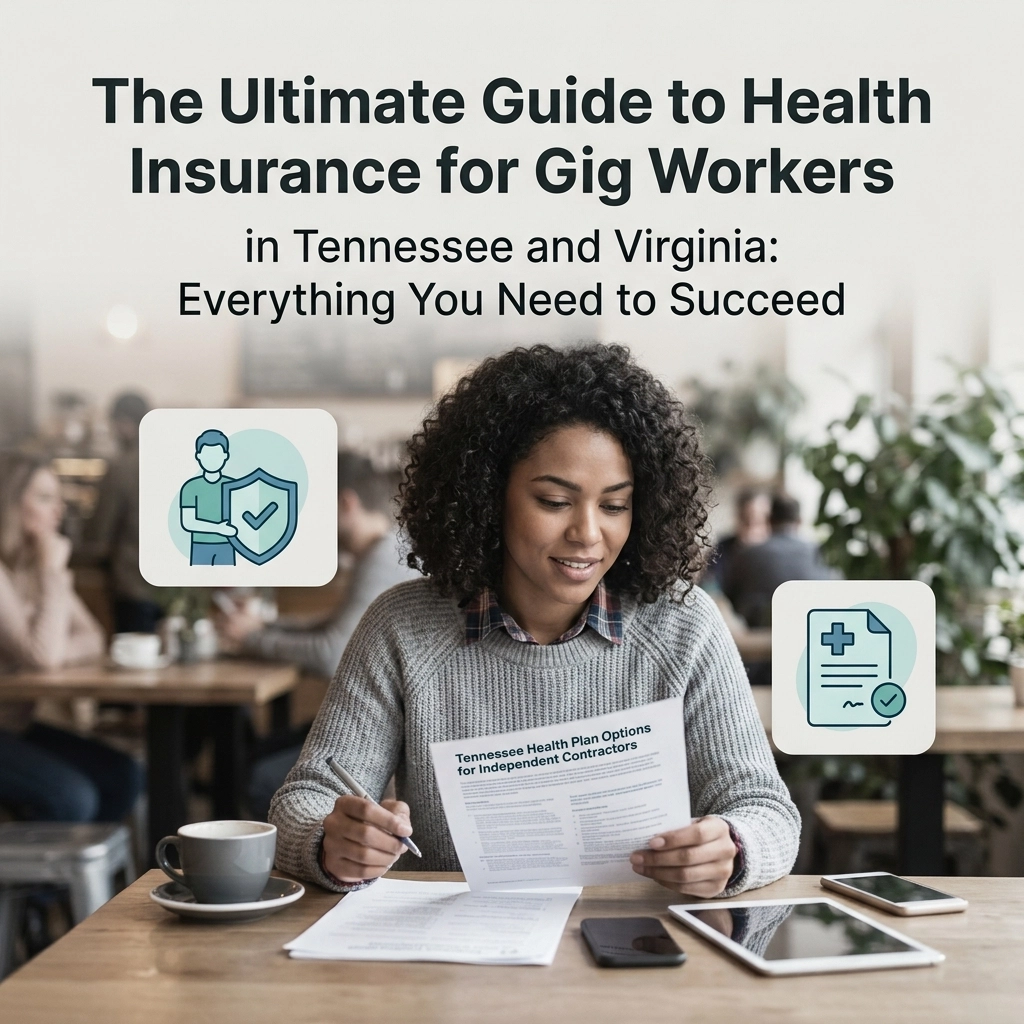
So, you’ve ditched the soul-crushing 9-to-5 for the freedom of the gig economy. Maybe you’re a freelance graphic designer in Nashville, a consultant in Northern Virginia, or you're keeping the Richmond streets moving as a rideshare driver. You love the flexibility and the fact that you don't have to ask a boss for permission to take a long weekend.
But then, reality hits: there’s no HR department to hand you a benefits packet. When you’re your own boss, you’re also your own benefits coordinator. In states like Tennessee and Virginia, navigating the health insurance maze can feel like a full-time job in itself: and you already have one of those.
If you’ve been losing sleep wondering what happens if you get sick or how much of your hard-earned income will go toward premiums, this guide is for you. We’re going to break down exactly how to secure affordable, high-quality health insurance so you can focus on growing your business.

Why Health Insurance is Different for the 1099 Crowd
When you’re a W-2 employee, your employer usually pays a massive chunk of your health insurance premium before you even see your paycheck. As a gig worker or 1099 contractor, that "hidden" cost becomes very visible. However, being self-employed also gives you access to specific tax advantages and plan types that traditional employees can't always tap into.
The biggest hurdle for most gig workers in 2026 isn't a lack of options: it’s the overwhelming amount of them. Between the ACA Marketplace, private plans, and short-term options, it’s easy to make a health insurance mistake that could cost you thousands.
The Power of the ACA Marketplace in 2026
For the vast majority of gig workers in Tennessee and Virginia, the Affordable Care Act (ACA) Marketplace is the gold standard. Why? Because it’s the only place where you can get premium tax credits (subsidies) that can drastically lower your monthly costs.
In 2026, these subsidies are more robust than ever. Depending on your estimated annual income, your monthly premium could be incredibly low: sometimes even $0.
Tennessee vs. Virginia: Where Do You Shop?
While both states offer ACA plans, the way you access them is a bit different:
- Tennessee: Residents use the federal platform at Healthcare.gov. Whether you're in Memphis or Knoxville, this is your hub for subsidies and plan comparisons.
- Virginia: Virginia operates its own state-based exchange called the Virginia Health Benefit Exchange (Virginia Insurance Marketplace). It’s tailored specifically to Virginians, though the types of plans and subsidy rules remain very similar to the federal level.
If you’re wondering what ACA health insurance actually is, think of it as a guaranteed-issue plan. This means they cannot deny you for pre-existing conditions, and they must cover "essential health benefits" like emergency services, prescription drugs, and mental health care.

Understanding Plan Types: HMO, PPO, and EPO
Once you start looking at plans in TN or VA, you’ll see a lot of "alphabet soup." Choosing the wrong one could mean your favorite doctor is suddenly "out of network."
- HMO (Health Maintenance Organization): These usually have the lowest premiums but require you to stay within a specific network of doctors. You’ll also likely need a referral from a primary care doctor to see a specialist.
- PPO (Preferred Provider Organization): These are the favorites for many freelancers because of the flexibility. You can see almost any doctor (though in-network is cheaper), and you don't usually need referrals.
- EPO (Exclusive Provider Organization): A bit of a hybrid. You don't need referrals, but you must stay in-network for the insurance to pay anything (except for emergencies).
Deciding between HMO vs. PPO vs. EPO is one of the most important steps in your journey. If you travel between Tennessee and Virginia for work, a PPO might give you the peace of mind you need.
The Gig Worker’s Secret Weapon: The HSA
If you are generally healthy and want to save money on taxes, you need to look at High Deductible Health Plans (HDHPs) that are HSA-compatible.
A Health Savings Account (HSA) is a tax-advantaged savings account. You put money in tax-free, it grows tax-free, and you take it out tax-free to pay for medical expenses. For a gig worker, this is a double win: you get lower monthly premiums and a powerful tax deduction that lowers your taxable income at the end of the year.
When Can You Enroll?
You can’t just buy health insurance on a whim. Generally, you have two windows:
- Open Enrollment: This typically happens once a year (usually November through January).
- Special Enrollment Period (SEP): If you’ve recently lost your job, moved to a new state (like moving from Virginia to Tennessee), got married, or had a baby, you may qualify for a 60-day window to sign up outside of the standard dates.
Understanding the difference between Open Enrollment and Special Enrollment is key to making sure you aren't left without coverage for half the year.

Budgeting for Coverage: What Does It Actually Cost?
We get this question every day: "What does health insurance actually cost without an employer?"
The answer is: it depends on your "Modified Adjusted Gross Income" (MAGI). Since gig income can be "feast or famine," you’ll need to estimate your annual earnings. If you overestimate, you might pay too much each month (but you’ll get it back at tax time). If you underestimate, you might owe money back when you file your taxes.
For a deeper dive into the numbers, check out our guide on what health insurance costs without an employer plan.
Decoding the Jargon
Before you sign on the dotted line, make sure you’re comfortable with these terms:
- Deductible: The amount you pay out of pocket before the insurance kicks in.
- Copay: A flat fee you pay for a specific service (like $30 for a doctor’s visit).
- Out-of-Pocket Maximum: The "safety net." Once you reach this amount in a year, the insurance pays 100% of covered costs.
If this still feels like a foreign language, we have a full breakdown of health insurance terms explained just for you.
Why You Shouldn't Go It Alone
You’re an expert at what you do: whether that’s coding, consulting, or craftsmanship. You shouldn't be expected to be an insurance actuary, too.
The plans available in Tennessee (like those from BlueCross BlueShield of Tennessee or Oscar) and Virginia (like Anthem or Sentara) have different networks and nuances. Working with an agent doesn't cost you a penny extra: the prices are the same whether you use an agent or buy directly from the marketplace: but you get the benefit of someone who knows the "fine print."

Take the Next Step Toward Peace of Mind
Being a gig worker in Tennessee or Virginia is an incredible way to live, but it shouldn't come at the expense of your health or financial security. Whether you're looking for the cheapest silver plan or the most robust PPO, there is a solution that fits your budget.
Ready to see what options are available for you in 2026? Don't leave your health to chance.
Get a personalized quote today at Real Health Quote.
Disclaimer: Michael Peck is a licensed insurance agent, not a legal or financial advisor. Health insurance plans, subsidies, and regulations can change. Always consult with a professional regarding your specific tax or legal situation.

Leave a Reply