
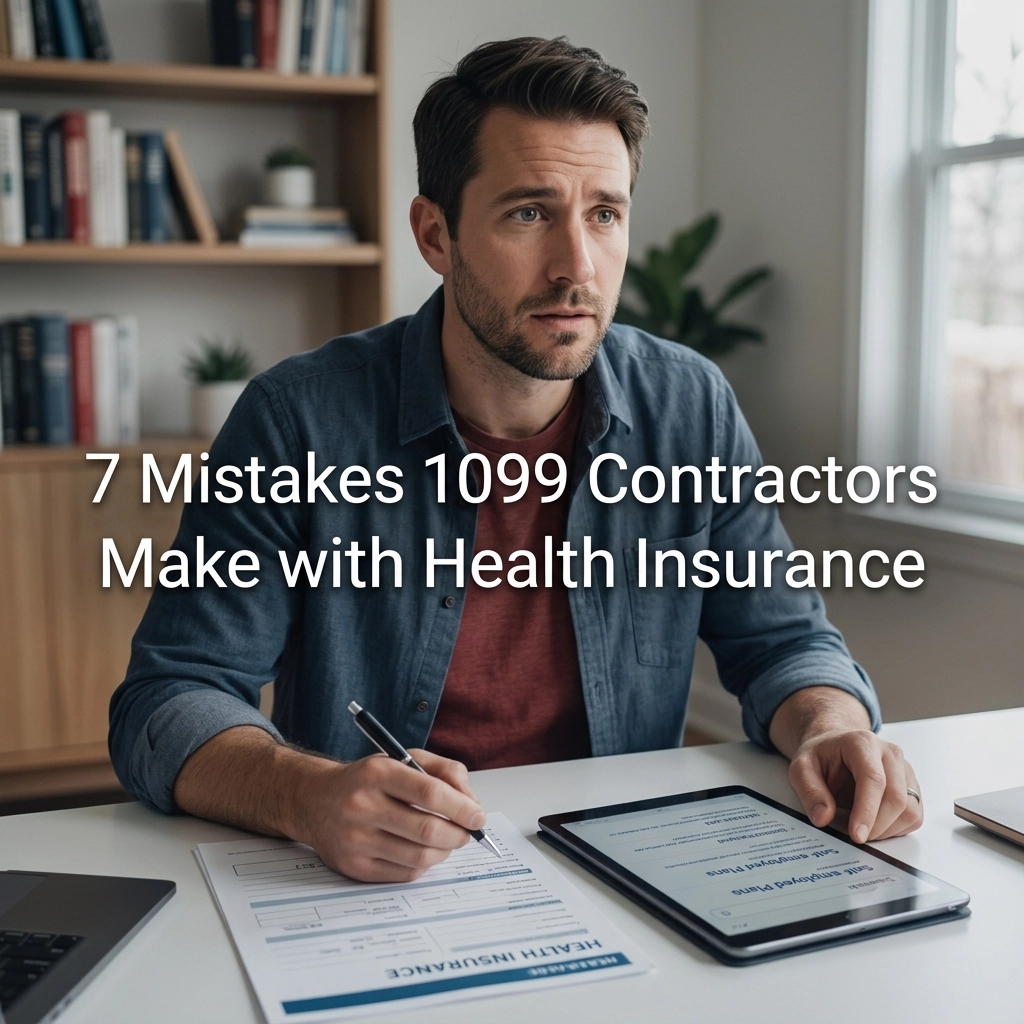
So, you’ve made the leap. You traded the cubicle for the freedom of being a 1099 contractor. Whether you're a consultant in Texas, a freelance designer in Florida, or a contractor in Virginia, that independence feels great, until you realize you’re also the CEO, the IT department, and the HR director in charge of your own benefits.
Navigating the world of health insurance without a corporate safety net can feel like walking through a minefield. Many independent professionals end up overpaying for plans they don't need or, worse, finding themselves underinsured when an emergency hits.
If you’re feeling overwhelmed, you’re not alone. We see the same hurdles popping up for self-employed folks across the 15 states we serve, from Michigan down to Georgia. Let’s break down the seven most common mistakes 1099 contractors make and, more importantly, how you can fix them.
1. Waiting Until You "Need" It to Enroll
One of the biggest mistakes is the "I'll wait and see" approach. You’re healthy, you’re busy, and you don’t want to deal with the paperwork. You figure you’ll just get insurance if you get sick.
The problem? Health insurance doesn’t work like a fast-food drive-thru. You generally can’t just sign up the moment you get a diagnosis. Most plans have specific windows called Open Enrollment or Special Enrollment periods. If you miss these, you might be stuck without coverage for an entire year.
The Fix: Don’t wait for a crisis. If you just left a W-2 job, you likely qualify for a Special Enrollment Period (SEP). This gives you 60 days to lock in a plan. Even if you're outside that window, a licensed agent can help you see if you qualify for other options.

2. Ignoring the ACA Marketplace Subsidies
Many 1099 workers assume that because they make a "good" living, they won't qualify for help on the ACA Marketplace. They skip the exchange entirely and look for private plans that might actually cost them more.
Thanks to recent legislative updates, tax credits (subsidies) are more accessible than ever. These credits act like a discount on your monthly premium. Depending on your projected income and where you live, whether it's Ohio, North Carolina, or Oklahoma, you might be surprised at how much you can save.
The Fix: Always check the ACA Marketplace first. Even if you don't think you qualify, it’s worth a five-minute check. Many people find that their premiums are significantly reduced, sometimes even down to $0 per month, based on their income and family size.
3. Only Focusing on the Monthly Premium
It’s tempting to sort by "Price: Low to High" and click the cheapest option. We get it; cash flow is king when you're self-employed. However, a low premium often means a sky-high deductible.
If you choose a plan with a $9,000 deductible just to save $50 a month, you aren't really "covered" for the small stuff. One trip to the urgent care in Kansas or a specialist visit in Tennessee could wipe out all the money you "saved" on premiums.
The Fix: Look at the total cost of care. Compare the deductible, the out-of-pocket maximum, and the co-pays for services you actually use. If you see a doctor regularly or take prescriptions, a slightly higher monthly premium might save you thousands over the course of the year. You can learn more about these health insurance terms here.

4. Forgetting the Self-Employed Health Insurance Deduction
This is a big one that affects your bottom line. Many contractors treat their health insurance like a personal expense rather than a business-related deduction.
If you are self-employed and have a net profit for the year, you may be able to deduct the premiums you pay for medical, dental, and qualified long-term care insurance for yourself, your spouse, and your dependents. This is an "above-the-line" deduction, meaning it reduces your adjusted gross income (AGI) and can lower your overall tax bill.
The Fix: Keep meticulous records of your premium payments. When tax season rolls around in Missouri or South Carolina, make sure you or your CPA are claiming the Self-Employed Health Insurance Deduction. It’s one of the few perks of being your own boss!
5. Falling for "Junk" Plans
When searching for affordable health insurance, you might run into plans that seem too good to be true. These are often "limited benefit" plans or short-term policies that don’t cover essential health benefits.
They might not cover maternity care, mental health, or pre-existing conditions. Worse, they can have "caps" on what they pay. If you have a major accident in Indiana or a serious illness in Mississippi, a junk plan might stop paying after the first $10,000, leaving you with a massive bill.
The Fix: Ensure your plan is ACA-compliant if you want full protection. ACA-compliant plans are required to cover pre-existing conditions and the ten essential health benefits. If you're looking at a plan that seems incredibly cheap, read the fine print or ask an expert to review it with you.

6. Not Factoring Insurance Into Your Rates
When you worked a W-2 job, your employer likely paid a huge chunk of your health insurance. Now that you’re 1099, that cost is 100% on you. Many contractors forget to bake this cost into their hourly rate or project fees.
If you’re charging the same rate you made as an employee, you’re actually taking a pay cut because you’re now responsible for your own benefits and self-employment taxes.
The Fix: Do the math. Calculate your annual health insurance premiums and out-of-pocket costs, then divide that by your billable hours. Adjust your rates accordingly to ensure your business is actually profitable after you’ve covered your basic needs.
7. Navigating the Mess Alone
You wouldn’t try to fix your own plumbing or represent yourself in a complex legal case, so why try to navigate the massive bureaucracy of health insurance alone? The rules change frequently, and the options in Virginia might be completely different from the options in Delaware.
The most common mistake we see is people spending hours on Google, getting frustrated, and then just giving up or picking a plan at random.
The Fix: Talk to a pro. Working with a licensed agent doesn't cost you a dime extra. Agents are paid by the insurance companies, not by you. We can help you compare HMO vs. PPO vs. EPO and find the plan that actually fits your life and budget.

How to Get It Right Today
Being a 1099 contractor is about taking control of your career. Taking control of your health insurance is the next logical step. By avoiding these seven mistakes, you can protect your health and your bank account simultaneously.
If you live in TX, DE, FL, IN, KS, MS, MO, NC, SC, OH, OK, MI, TN, GA, or VA, we are here to help you simplify the process. You don't have to guess which plan is best for your family or your business.
Ready to see your options?
Get your free, no-obligation health insurance quote here.
Disclaimer: Michael Peck is a licensed insurance agent, not a legal or financial advisor. Health insurance regulations and tax laws can change; please consult with a tax professional regarding your specific situation and deductions. The information provided is for educational purposes and does not constitute financial or legal advice.

Leave a Reply