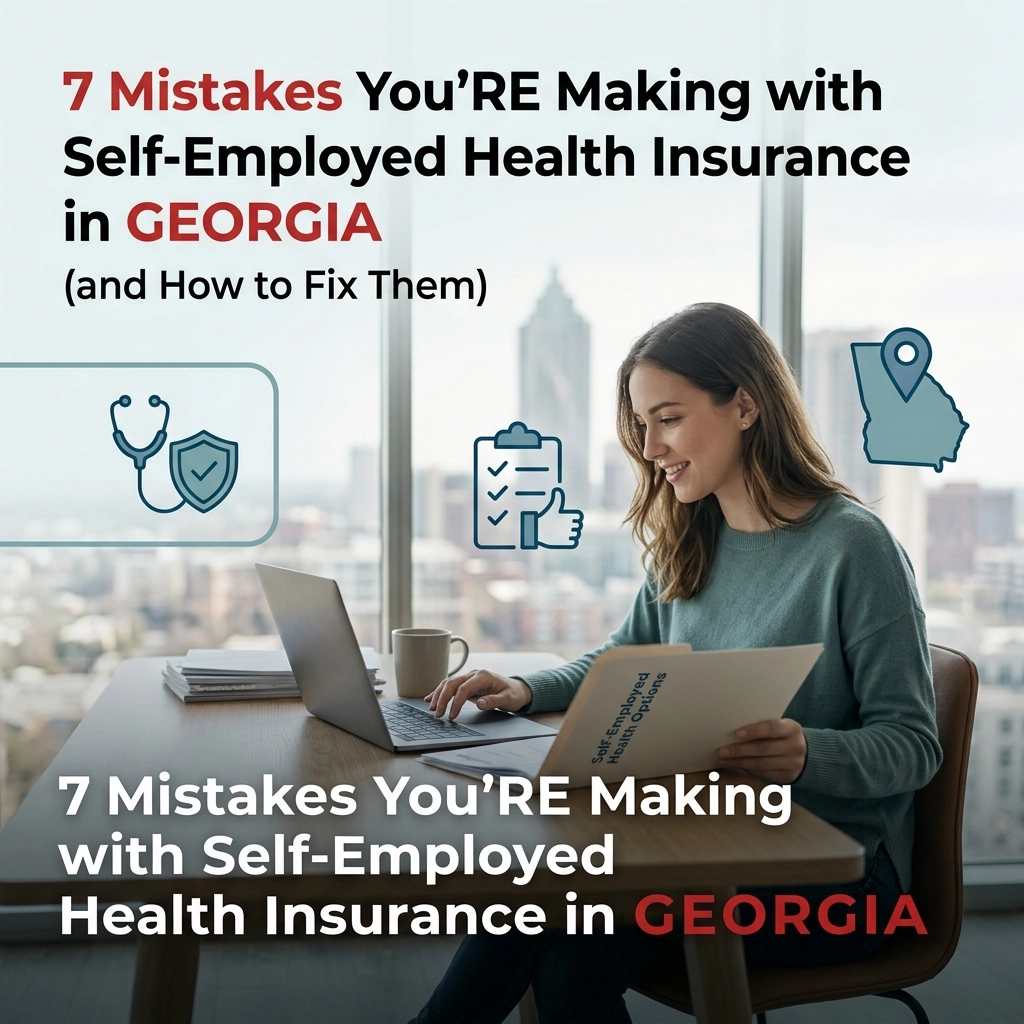
Being your own boss in Georgia is the dream. Whether you’re running a boutique in Savannah, consulting in Atlanta, or freelancing from a quiet spot in the Blue Ridge Mountains, the freedom is unbeatable. But then comes the "I" word: insurance.
Finding affordable health insurance when you don't have an HR department to hand you a packet can feel like a part-time job you never applied for. In fact, many self-employed Georgians end up overpaying or, worse, going without coverage because the process is so confusing.
I see it every day at Real Health Quote. People work incredibly hard to build their businesses, only to lose those hard-earned profits to high premiums or medical bills they thought were covered.
Here are the 7 most common mistakes I see self-employed people making in Georgia right now, and exactly how you can fix them to protect your health and your wallet.
1. Assuming the ACA Marketplace is "Too Expensive"
One of the biggest myths I hear is that the ACA marketplace is only for people with very low incomes. If you’re a successful freelancer or contractor making a solid living, you might assume you won't qualify for any help.
In reality, the "subsidy cliff" has been smoothed out significantly in recent years. Many self-employed individuals in Georgia are shocked to find they qualify for substantial tax credits that bring their monthly premiums down to nearly nothing.
The Fix: Don’t self-disqualify. Always check the marketplace options first. Even if you think you make "too much," the way your business expenses are deducted can lower your Modified Adjusted Gross Income (MAGI), making you eligible for affordable health insurance you didn't think possible.

2. Waiting Until You Get Sick to Look for Coverage
I get calls all the time from people who just found out they need surgery or a recurring prescription and want to sign up for a plan immediately. Unfortunately, health insurance isn't like a roadside assistance club you can join while you're stranded on the shoulder of I-75.
Outside of the Open Enrollment Period, you generally can't just sign up whenever you want. You need a Qualifying Life Event (like getting married, moving, or losing other coverage) to trigger a Special Enrollment Period.
The Fix: Mark your calendar for Open Enrollment (usually starting November 1st). If you’ve recently left a corporate job to go solo, you usually have a 60-day window to get covered. Check out our guide on Open Enrollment vs. Special Enrollment to see if you can hop on a plan right now.
3. Misreporting Your "Self-Employed" Income
This is the technicality that trips up most people. When you apply for a plan on the ACA marketplace, you’re asked to estimate your income for the coming year. For a business owner, that’s like trying to predict the weather in Georgia, one minute it’s sunny, the next it’s a thunderstorm.
If you estimate too high, you pay more in premiums every month than you need to. If you estimate too low, you might have to pay back some of those tax credits when you file your taxes next spring.
The Fix: Use your "Net Profit" from your Schedule C, not your gross revenue. Remember that business expenses are your friend here. We have a detailed breakdown of how ACA tax credits work for self-employed people that can help you navigate these estimates.

4. Forgetting the Self-Employed Health Insurance Tax Deduction
This isn't just about the insurance plan; it’s about how you handle it with the IRS. Many self-employed Georgians take the standard deduction on their taxes and think that’s the end of it.
However, the self-employed health insurance deduction is an "above-the-line" deduction. This means it reduces your adjusted gross income (AGI) regardless of whether you itemize or take the standard deduction. It covers premiums for you, your spouse, and your dependents.
The Fix: Make sure you (or your CPA) are using Form 7206. It can save you thousands of dollars in taxes. Just remember: you can't claim this deduction for any month you were eligible to participate in a health plan subsidized by your spouse's employer.
5. Choosing an HMO Without Checking the Provider Network
Georgia has a unique healthcare landscape. We have some world-class hospital systems, but not every insurance plan plays nice with them. I've seen people sign up for the cheapest plan they could find, only to realize their favorite doctor at Piedmont or Emory isn't in the network.
In Georgia, you’ll mostly see HMOs (Health Maintenance Organizations) and EPOs (Exclusive Provider Organizations). If you go out-of-network on these plans, you are usually responsible for 100% of the bill.
The Fix: Before you hit "enroll," use the provider search tool to ensure your doctors and local hospitals are "In-Network." If you’re confused about the difference between plan types, read our guide on HMO vs PPO vs EPO.

6. Using Short-Term Plans as a Permanent Shield
Short-term health insurance plans can look tempting. The premiums are often very low, and the sign-up process is quick. However, as of 2026, federal regulations have tightened up on these. They are meant to be a bridge, not a destination.
Short-term plans in Georgia often don't cover "essential health benefits" like maternity care or mental health, and they can deny you for pre-existing conditions. If you have a major health event, you might find your "affordable" plan has a very low cap on what it will actually pay.
The Fix: Only use short-term plans for their intended purpose, filling a gap of a few months. For long-term peace of mind, an ACA-compliant plan is almost always the better financial move for a business owner.
7. Navigating the Mess All By Yourself
The biggest mistake? Spending hours on Google trying to figure this out alone. As a self-employed person, your time is literally money. Every hour you spend trying to decode health insurance terms is an hour you aren't billing clients or growing your business.
Many people think hiring an agent costs extra. In the world of health insurance, that’s not how it works.
The Fix: Work with a licensed agent (like me!). The premiums are the exact same whether you go through an agent or do it yourself. The difference is that an agent knows the Georgia market, understands the tax implications for the self-employed, and can help you avoid the "gotchas" in the fine print.

Keeping Your Business (and Health) Healthy
You’ve put a lot of blood, sweat, and tears into your self-employed journey. Don’t let a bad insurance decision or a missed tax credit derail your progress. Georgia has plenty of options for affordable health insurance; you just need to know where to look and which mistakes to avoid.
If you’re feeling overwhelmed, take a breath. You don't have to be an expert in insurance to get great coverage, you just have to know who to ask.
Need a Hand?
If you're ready to stop guessing and start saving, I'm here to help. We can look at the Georgia marketplace together, calculate your credits, and find a plan that actually fits your life.
Get Your Personalized Quote Here
Disclaimer: Michael Peck is a licensed insurance agent, not a legal or financial advisor. For specific tax or legal advice regarding your business, please consult with a qualified professional. Insurance availability and rates can vary based on location and individual circumstances.


Leave a Reply